Does Air Conditioning Use More Fuel? The Numbers Explained
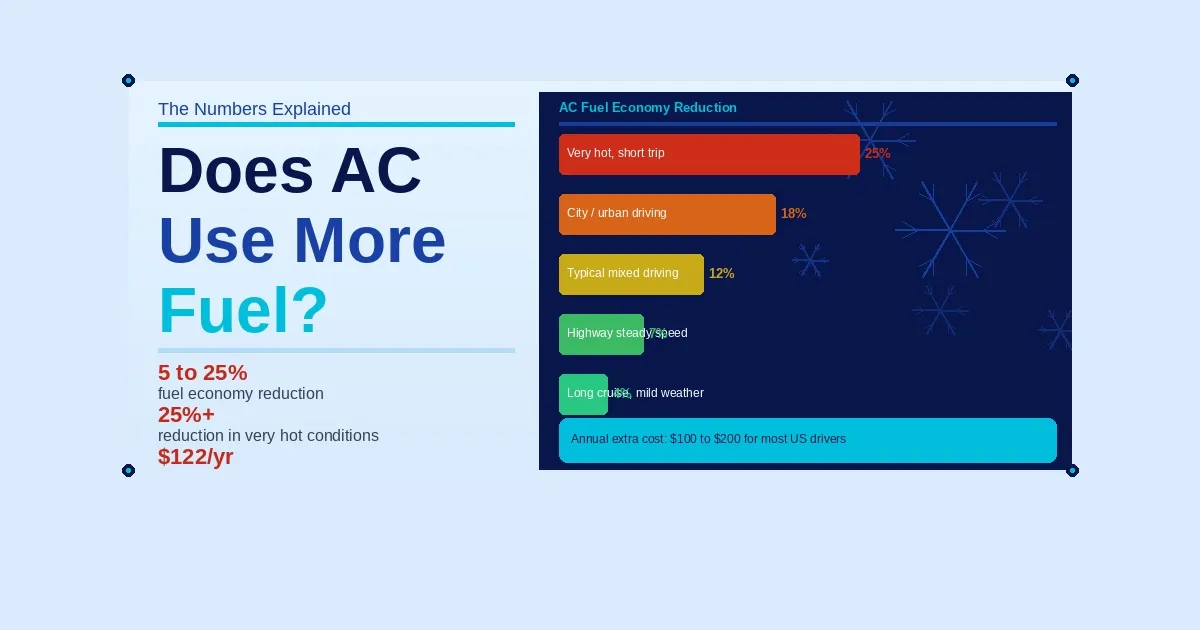
Yes, car air conditioning uses more fuel. The AC compressor is belt-driven by the engine, adding mechanical load and forcing it to burn extra fuel. The U.S.Department of Energy confirms AC can reduce fuel economy by more than 25 percent in very hot conditions on short trips. In typical conditions the reduction runs 5 to 20 percent.
This guide covers how much fuel AC uses, what it costs per year, when open windows beat AC, and how to reduce the impact without giving up comfort.
Use our MPG calculator to measure your fuel
economy with and without AC running and see the real difference for your vehicle.
Reviewed by the FuelConsumptionCalc Editorial Team.
Sources: U.S. Department of Energy (fueleconomy.gov), Transportation Research
Record, SAE International, AAA Your Driving Costs 2025, FixMyCar March 2026, Kelley Blue Book March 2026, Consumer Reports July 2026.
Last Updated: July 2026.
Quick Answer: Car AC reduces fuel economy by 5 to 25 percent, depending on conditions. Below 45 to 50 mph, open windows use less fuel than AC. Above 50 mph, aerodynamic drag from open windows costs more fuel than the compressor. The annual extra cost for most US drivers runs $100 to $200.
AC Fuel Economy Impact by Condition
| Driving Condition | AC Fuel Economy Reduction | Source |
| Very hot conditions, short trips | More than 25% | DOE fueleconomy.gov |
| Urban/city driving | Up to 21% | Transportation Research Record |
| Highway driving | 6 to 10% | Transportation Research Record |
| Typical mixed driving | 5 to 20% | SAE International |
Under very hot conditions, A/C use can reduce a conventional vehicle’s fuel economy by more than 25%, particularly on short trips. – U.S. Department of Energy, fueleconomy.gov
1.How AC Uses Fuel
The AC compressor sits at the heart of the system. It compresses refrigerant, allowing it to release heat through the condenser and cool air through the evaporator before it reaches the cabin vents.
The compressor connects to the engine via a belt. When you switch on the AC, the compressor engages and draws mechanical energy directly from the engine. The engine burns extra fuel to maintain speed while also driving the compressor. The hotter the outside temperature and the lower your target cabin temperature, the harder the compressor works and the more fuel it consumes.
2.How Much Fuel Does AC Use?
AC fuel consumption runs 0.2 to 0.4 litres per hour in typical conditions.At $4.07 per gallon that equals $0.22 to $0.43 per hour in extra fuel.
In very hot weather on a short trip, the DOE confirms reductions above 25 percent. A car averaging 30 MPG drops to under 22 MPG. In typical mixed driving at oderate temperatures, the impact runs 5 to 20 percent. A 30 MPG vehicle drops to 24 to 28 MPG. On a long highway cruise in mild weather, the impact falls to 3 to 5 percent as the cabin stays at temperature.
Small cars see larger percentage drops than large vehicles because the compressor load is bigger relative to a smaller engine’s total output.
3. City vs Highway
AC hurts fuel economy most in city driving. The ransportation Research Record study found reductions of up to 21 percent in urban conditions versus 6 to 10 percent on the highway. Two reasons explain this gap.
In stop-and-go traffic, the engine already operates inefficiently at low RPM with repeated acceleration. Adding the compressor load to this stressed engine amplifies the fuel penalty. At low speeds, less airflow reaches the condenser, making heat rejection harder and forcing the compressor to work longer.
On the highway at steady speed, the engine runs in its most efficient range.The compressor load is a smaller share of total engine output, and higher vehicle speed pushes more air through the condenser, reducing compressor effort.
Short trips in hot weather produce the highest AC fuel penalty. The compressor runs at maximum capacity throughout the entire journey to cool a hot cabin. A long motorway cruise keeps the compressor cycling minimally once the cabin reaches temperature.
4.Windows vs AC: The Speed Threshold
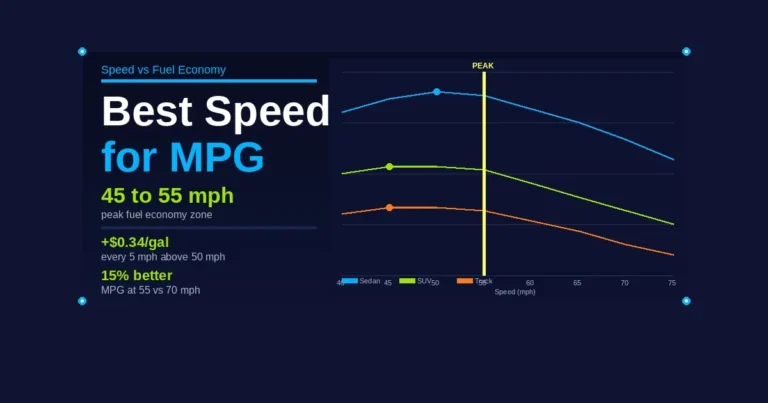
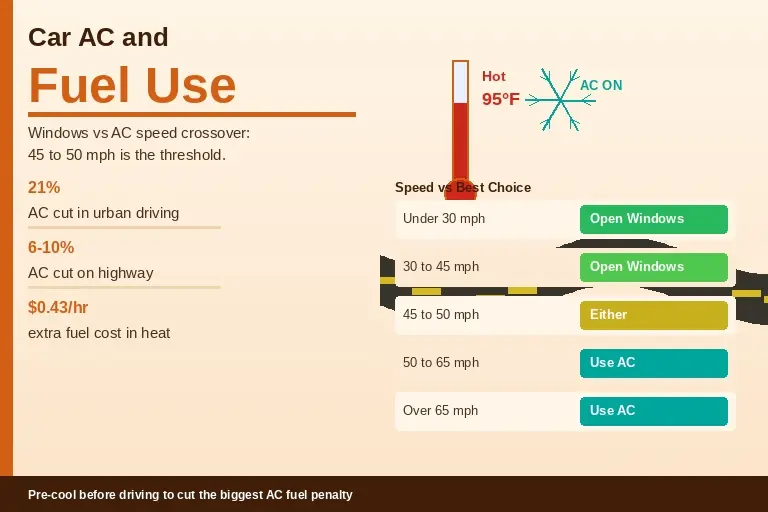
Below 45 to 50 mph, open windows use less fuel than AC. At low speeds the aerodynamic drag from open windows is small. Above 50 mph, open windows create enough resistance that the fuel cost of overcoming that drag exceeds the cost of running the AC compressor.
| Speed | Open Windows | AC Running | Best Choice |
| Under 30 mph | Small drag | Compressor load | Windows |
| 30 to 45 mph | Moderate drag | Compressor load | Windows |
| 45 to 50 mph | Crossover zone | Crossover zone | Either |
| 50 to 65 mph | High drag | Moderate load | AC |
| Over 65 mph | Very high drag | Higher load | AC |
Use our trip fuel calculator to compare fuel costs at different speeds before any long journey.
Best combined strategy: use windows below 45 mph, switch to AC above 50 mph, and activate recirculation mode once the cabin cools to maintain temperature with minimal compressor effort.
5. Annual Cost of Running AC
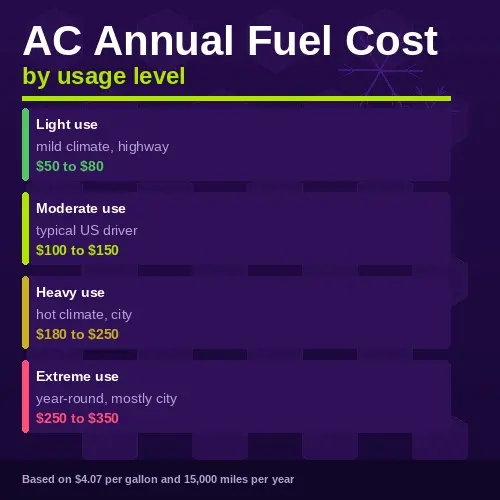
Most drivers use AC for 4 to 6 months per year on about 60 percent of their driving. Applying a 10 percent fuel penalty to 60 percent of 15,000 miles at 30 MPG and $4.07 per gallon gives an extra annual cost of approximately $122.Heavy users in hot climates with year-round city driving reach $250 to $350.
| AC Usage Level | Extra Fuel Cost Per Year |
| Light (mild climate, mostly highway) | $50 to $80 |
| Moderate (typical US driver) | $100 to $150 |
| Heavy (hot climate, city driving) | $180 to $250 |
| Extreme (year-round, mostly city) | $250 to $350 |
Use our fuel cost calculator to find your current fuel spend, then apply the percentage from your usage level above.
6.EV and Hybrid AC
In a battery electric vehicle, the AC system draws power from the battery pack rather than a petrol engine. The DOE notes this effect can be even larger on a percentage basis than on petrol cars. Over a 40-mile commute in hot weather, EV AC reduces range by 15 to 20 percent.
Pre-cooling the cabin while still plugged into the charger is the most effective EV strategy. Cooling from 100 to 72 degrees on grid power rather than battery power extends driving range on the road.
For full hybrid vehicles, the AC compressor can run electrically at low speeds, reducing the fuel economy impact compared to a petrol car in stop-and-go traffic.
7.How to Reduce AC Fuel Use
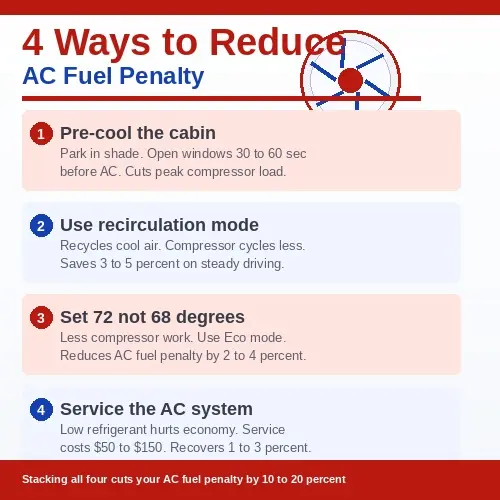
You do not have to choose between staying cool and saving fuel. These four strategies cut the fuel cost of running your AC without giving up cabin comfort. Applied together they reduce your AC fuel penalty by 10 to 20 percent
compared to running the system on default settings.
Pre-Cool Before Driving
Park in shade or use a windshield sunshade. Open windows for 30 to 60 seconds before starting the AC. This cuts the initial cooling load when the compressor works hardest. Track your total vehicle running cost including AC impact with our cost per mile calculator.
Use Recirculation Mode
Once the cabin reaches a comfortable temperature, switch to recirculation mode.
This reuses already-cooled cabin air instead of pulling in hot outside air.The compressor cycles less and fuel consumption drops 3 to 5 percent during steady-state cooling.
Raise Target Temperature and Use Eco Mode
Setting AC to 72 degrees instead of 68 degrees reduces compressor workload.
Eco mode, available on many modern vehicles, runs the compressor less
aggressively and reduces the AC fuel penalty by 2 to 4 percent.
Keep the AC System Serviced
Low refrigerant forces the compressor to work longer for the same cooling.A clogged cabin air filter restricts airflow through the evaporator. Annual servicing costs $50 to $150 and can recover 1 to 3 percent in fuel economy if the system is underperforming. Check and replace the cabin air filter every 15,000 to 25,000 miles.
Track your monthly fuel spend using our monthly
fuel cost calculator[/LINK] to see AC’s real impact on your fuel bill.
Methodology
Percentages from U.S. Department of Energy fueleconomy.gov (June 2026), Z Transportation Research Record AC fuel economy study, SAE International, and AAA. Fuel price $4.07 per gallon from Consumer Reports, July 2026. Annual cost uses $4.07/gal, 15,000 miles, 30 MPG baseline. AC is assumed for 60 percent of miles in a moderate climate. Results vary by vehicle type, climate, and
driving pattern.